

Every cut tube leaves a burr. Whether the tube is sawn, cut with a disc knife, or parted on a lathe, the cut edge is left sharp and rough, with burrs on the outside edge, the inside edge, or both, depending on the cutting method. Left in place, those burrs scratch mating parts and block smooth assembly.
Chamfering removes them. This article explains what pipe chamfering is, how it differs from weld beveling, how a pipe chamfering machine works, the most common chamfering problems, and how to choose the right machine for precision tube processing.
What Is Pipe Chamfering?
Pipe chamfering is the machining of a small angled edge onto the end of a pipe or tube, most often at 45°. A cutting tool removes the sharp corner left by cutting, along with the burr, leaving a clean, uniform transition between the end face and the tube wall. It removes only a small amount of material.
Why tube ends need chamfering
Deburring and safety. Chamfering removes burrs and sharp edges left by tube cutting, so parts are safe to handle and won't scratch the components they touch.
Easier assembly. A chamfered end slides more easily into fittings, hoses, sockets, and mating tubes, speeding assembly and protecting seals and O-rings from damage.
Preparation for end forming. In tube fabrication, chamfering often comes before end forming. A clean, deburred edge enters punches and dies more smoothly when the tube is later expanded, swaged, or flared.
Appearance. A uniform chamfer gives the tube end a clean, finished look, which matters for visible parts such as furniture frames.
Chamfering vs beveling
The two terms are often mixed up, but in pipework they describe different jobs.
Beveling prepares a pipe end for butt welding. The end is cut at an angle, typically 37.5° for a V-groove, often leaving a small flat land, so the welder can fill the groove and fully penetrate the joint. Dimensions and tolerances for butt-weld end preparation are covered by standards such as ASME B16.25. Thicker walls may need double-V or J-shaped bevels. Beveling removes a large part of the wall and is used mainly on heavier pipe in pipelines, power plants, shipbuilding, and oil and gas.
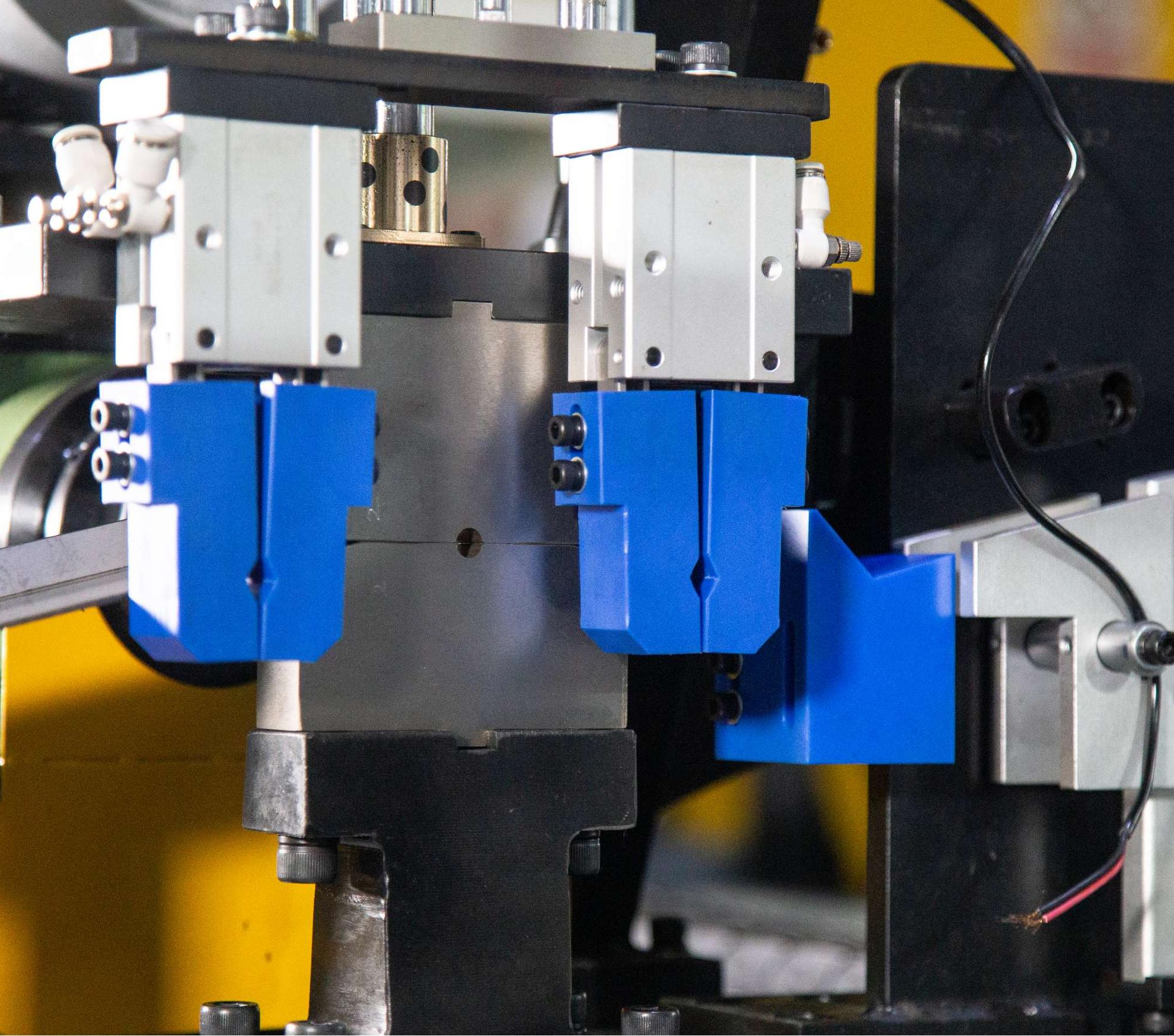
Chamfering removes only a small corner at the end of the tube, usually at 45°, to deburr it, ease assembly, and improve safety and appearance. It is the standard finishing step for small and medium tubes in high-volume production, such as air-conditioning lines, automotive tubes, and furniture tubes.
In short, a bevel is a weld preparation, while a chamfer is an edge finish. A pipe chamfering machine is designed for the second job.
Types of chamfers
Outside (OD) chamfer. Cut on the outer edge of the tube end. It eases insertion into fittings and sockets and removes the outside burr.
Inside (ID) chamfer. Cut on the inner edge. It removes the inside burr, which otherwise can restrict flow, trap debris, or damage parts that slide into the tube.
End facing. The end face is machined square to the tube axis. Facing is often combined with chamfering to give an accurate tube length and a flat end before forming or assembly.
What Is a Pipe Chamfering Machine?
A pipe chamfering machine is a dedicated machine that automatically chamfers, deburrs, and often faces tube ends. Compared with hand deburring tools or grinding, it produces the same chamfer on every part, at a much higher rate, which is why it is standard in high-volume tube production.
How a chamfering machine works
- Feeding. Tubes are loaded by hand or fed automatically from a hopper or magazine.
- Clamping. Clamping jaws hold the tube firmly and concentrically with the tool spindle.
- Chamfering. A rotating cutter head advances to the tube end. Depending on the tooling, it cuts the outside chamfer, the inside chamfer, and the end face, often in a single pass.
- Retraction and unloading. The tool retracts automatically, and the machine releases or ejects the finished tube.
The chamfer angle and size are set by the cutter inserts and the tool stroke, so once the machine is set up, every tube in the batch is chamfered the same way.
Single-head vs double-head tube chamfering machines
Single-head chamfering machines process one end of the tube per cycle. They are flexible, handle a wide range of tube lengths, and suit tubes that only need one end finished or batches with frequent changeovers.
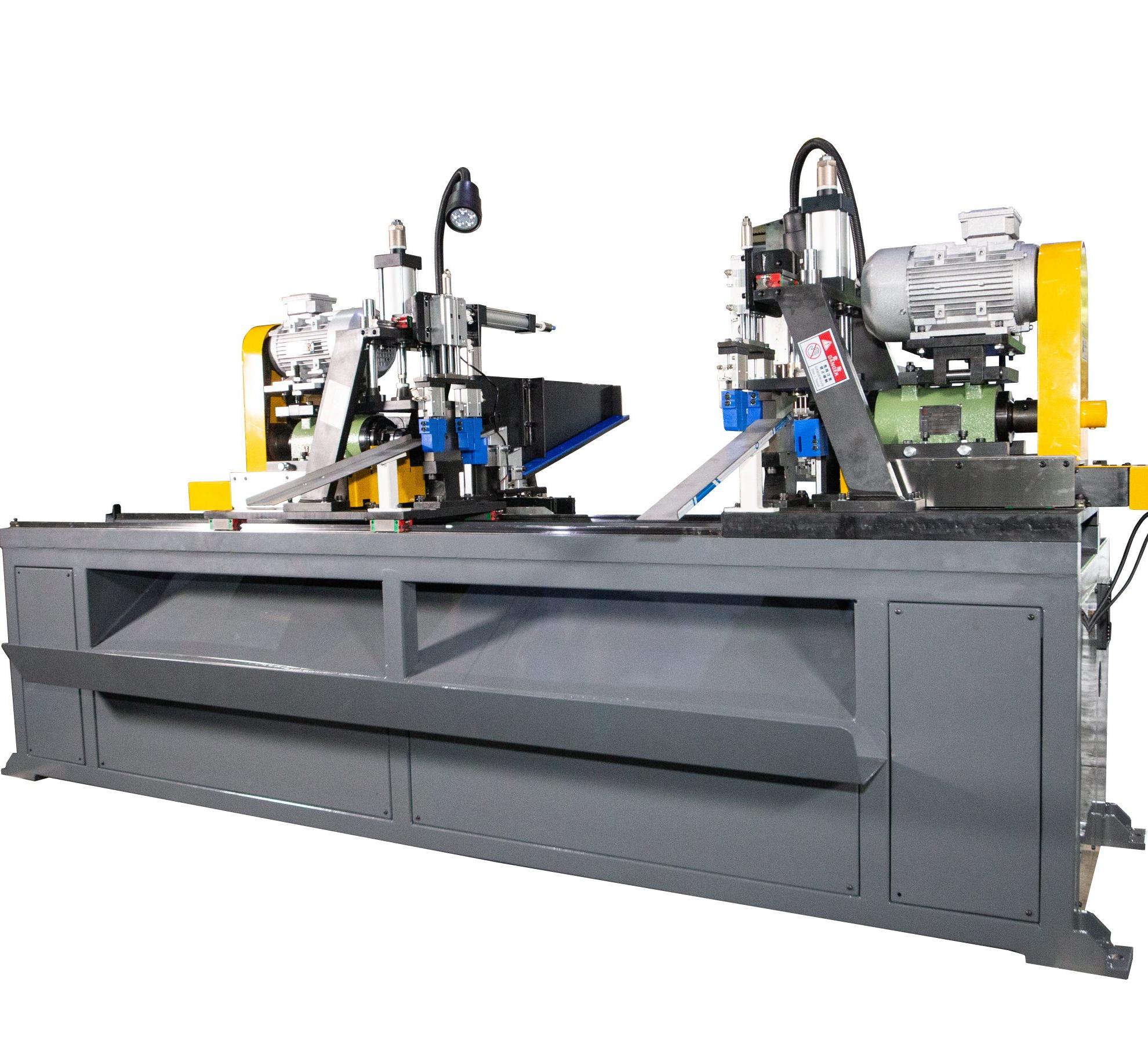
Double-head chamfering machines have a cutter head at each end and chamfer both ends of the tube at the same time. This keeps both ends consistent, making them the preferred choice for short tubes produced in large volumes, such as copper and aluminum tubes for air conditioners and refrigerators.
Applications of Pipe Chamfering
- Air conditioning and refrigeration. Chamfer short copper and aluminum tubes on both ends before brazing, flaring, or expanding so they fit cleanly and keep the refrigerant circuit free of chips and burrs.
- Automotive. Chamfer and deburr fuel, brake, A/C, and coolant tubes before end forming, bending, and assembly.
- Hydraulic and fluid lines. Deburred and chamfered ends protect seals and keep loose metal particles out of the system.
- Furniture and fitness equipment. Chamfering gives visible tube ends a clean, safe finish and makes it easier to fit plugs, caps, and connectors.
- General tube fabrication. Chamfering is a standard step between cutting and forming in automated tube processing lines.
Common Chamfering Problems and How to Avoid Them
1. Chatter marks and poor surface finish
A chamfer with chatter marks, waviness, or a rough finish looks poor and can damage seals or mating parts. Research on chamfering machines has traced these surface defects mainly to structural vibration of the machine itself during cutting, rather than to the tool alone.
A rigid machine structure is the first line of defense: studies show that design changes that stiffen the machine and reduce vibration directly suppress surface defects. On the shop floor, sharp inserts, firm clamping, and suitable spindle speed and feed help keep cutting stable.
2. Burrs left after chamfering
Sometimes a burr remains on the inside or outside edge after chamfering, or a new, smaller burr forms where the chamfer meets the end face. Burrs from cutting vary in size around the circumference and grow larger as the cutting tools wear, so a chamfer set for a typical burr may not remove the largest ones.
Set the chamfer size to cover the largest expected burr, chamfer both the inside and outside edges where both carry burrs, and keep both the cutting tools and the chamfering inserts sharp. Reducing burr size at the cutting stage also shortens the deburring work that follows.
3. Inconsistent chamfer size
When the chamfer is larger on some parts and smaller on others, assembly and forming results vary too. Common causes are tubes clamped at different positions, variation in cut length, and gradual insert wear.
A fixed end stop or automatic positioning ensures every tube meets the tool at the same point, and consistent upstream cut lengths keep the starting point stable. Checking chamfer size at regular intervals shows when to change inserts.
4. Off-center chamfer
An off-center chamfer is wider on one side than the other. It usually happens when the tube isn't held concentric with the cutter because of worn or wrongly sized clamp jaws, or when the tube end isn't cut square.
Use clamp jaws matched to the tube OD, replace them when worn, and check spindle and clamp alignment. A square cut, or facing the end before chamfering, gives the tool an even surface to work on.
5. Deformed or marked thin-walled tubes
Thin-walled tubes can be squeezed out of round or marked by the clamping jaws, which spoils both the chamfer and the later fit. This usually happens because of excessive clamping force or jaws that don't match the tube profile.
Limit clamping force to what is needed to stop the tube from rotating, use jaws with full contact around the tube, and choose a machine designed for the tube size and wall-thickness range you run.
How to Choose a Pipe Chamfering Machine
- Tube diameter and wall thickness. Match the machine’s OD and wall range to the tubes you run, including the smallest and thinnest.
- Tube length. Check the minimum and maximum lengths the machine can load and clamp, especially for very short tubes.
- Single or double head. Choose double-head machines for high volumes of short tubes that need both ends finished; single-head machines for flexibility and longer tubes.
- Chamfer capability. Confirm whether you need outside chamfering, inside chamfering, end facing or all three in one pass.
- Automation. Automatic feeding and tool engagement reduce labor and keep cycle times stable in batch production.
- Rigidity and precision. A stiff, stable machine structure gives a cleaner chamfer surface and longer tool life.
- Line integration. If tubes go straight on to forming, consider whether chamfering should be a separate step or a station built into a tube end forming machine.
GSIE tube and pipe chamfering machines
GSIE chamfering machines are designed for fast, automatic chamfering of small and medium tubes in batch production.
|
Model |
Type |
Key features |
|
Single-head |
Processes the end face, outer edge, and inner corner of tubes up to Ø50 mm, with automatic feeding and automatic tool engagement and retraction |
|
|
Double-head |
Chamfers both tube ends at the same time; tube OD Ø8–20 mm, wall under 1.8 mm, processing range 50–300 mm; designed for the air conditioning and refrigeration industry |
|
|
Double-head |
Automatic simultaneous chamfering of both tube ends; tube OD Ø8–20 mm, wall under 1.8 mm |
Conclusion
Chamfering is a small step that makes a big difference: it removes cutting burrs, makes tubes easier and safer to assemble, and gives later forming operations a clean edge to start from. Unlike weld beveling, it is a fast finishing operation suited to high-volume production of small and medium tubes. With the right pipe chamfering machine, rigid enough for a clean finish and matched to your tube sizes and lengths, every tube end comes out the same. To find the right model for your tubes, send your part drawing to the GSIE team.
FAQ
- What is the difference between chamfering and beveling a pipe?
Beveling cuts a large angled groove, typically 37.5°, to prepare a pipe for butt welding. Chamfering removes only a small corner, usually at 45°, to deburr the end, ease assembly, and improve safety.
- What angle is used for tube chamfering?
45° is the most common chamfer angle, but other angles can be produced depending on the cutter inserts and the part's requirements.
- Can a chamfering machine do inside and outside chamfers at the same time?
Many machines can chamfer the outside edge, the inside edge, and the tube end face in a single pass, depending on the cutter head and tooling.
- When should I choose a double-head chamfering machine?
When you produce large volumes of short tubes that need both ends finished, such as tubes for air conditioners and refrigerators.
- Is chamfering needed before end forming?
It is common practice: a deburred, chamfered edge enters forming dies more smoothly than a raw-cut edge.