
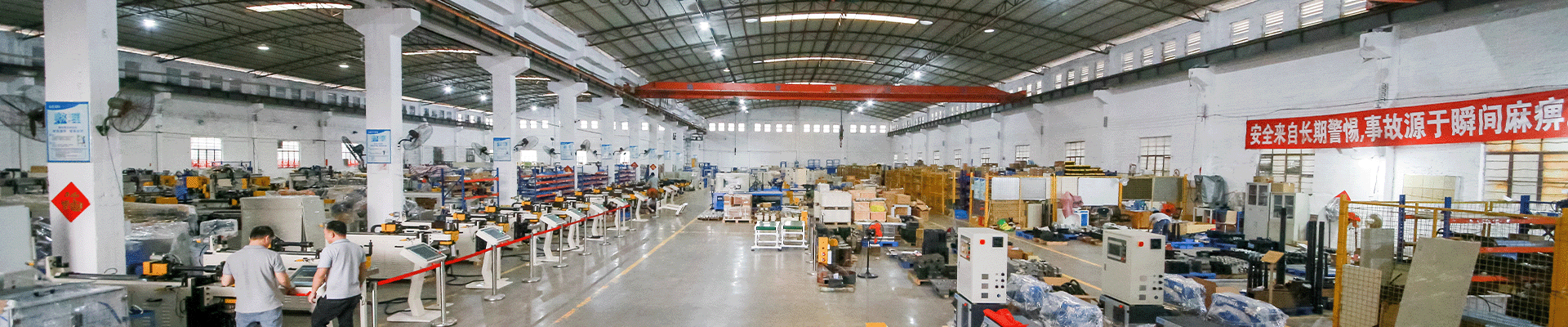
What is Pipe & Tube Bending Machine?
Metal tubes and pipes are rarely used in straight forms. From automotive exhaust systems to aerospace structures, most components require precise bending, forming, and assembly. This is where a pipe bending machine or tube bending machine becomes essential.
Today, with the rise of automation and precision engineering, CNC tube bending machines have become the industry standard. They allow manufacturers to produce complex shapes with high repeatability, minimal waste, and reduced labor costs. GSIE 4-station and 8-station configurations enable multiple operations—from cutting to bending—in a single clamping cycle, eliminating repeated loading and unloading to maximize throughput.
However, many buyers still struggle with a basic but critical question:
What is the difference between pipe bending and tube bending—and which machine is right for your application?
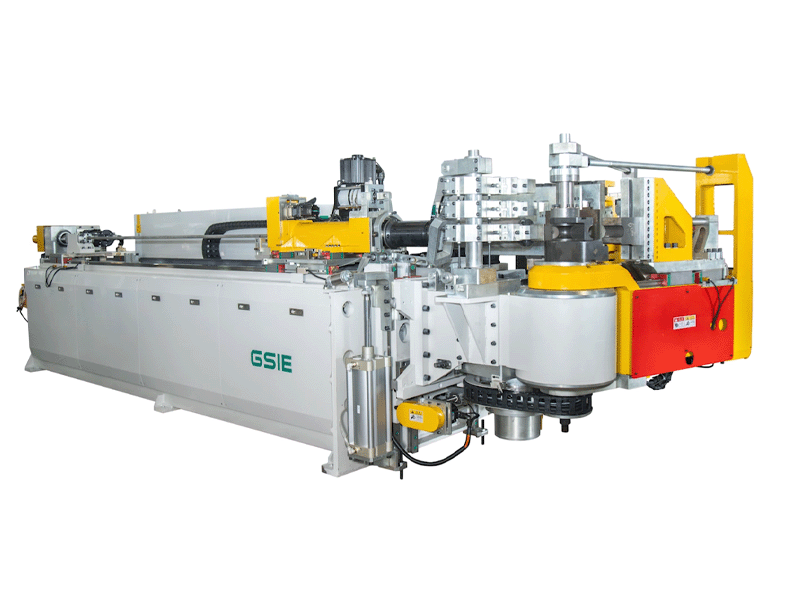
This guide will walk you through everything you need to know, from fundamental differences to complete tube processing solutions.
How Does a CNC Tube Bending Machine Work?
A CNC tube bending machine uses computer numerical control to automate and precisely manage the bending process.
A typical CNC bending cycle includes:
- Loading the tube into the machine
- Positioning via servo control system
- Rotating and feeding the material
- Bending according to programmed angles
- Repeating operations for multiple bends in a single cycle
The entire process is fully automated and controlled by CNC programming, which ensures high repeatability and consistent quality across large production batches.
This level of automation significantly reduces human error while improving production efficiency and dimensional accuracy.
Is Pipe and Tube Bending Machine Different?
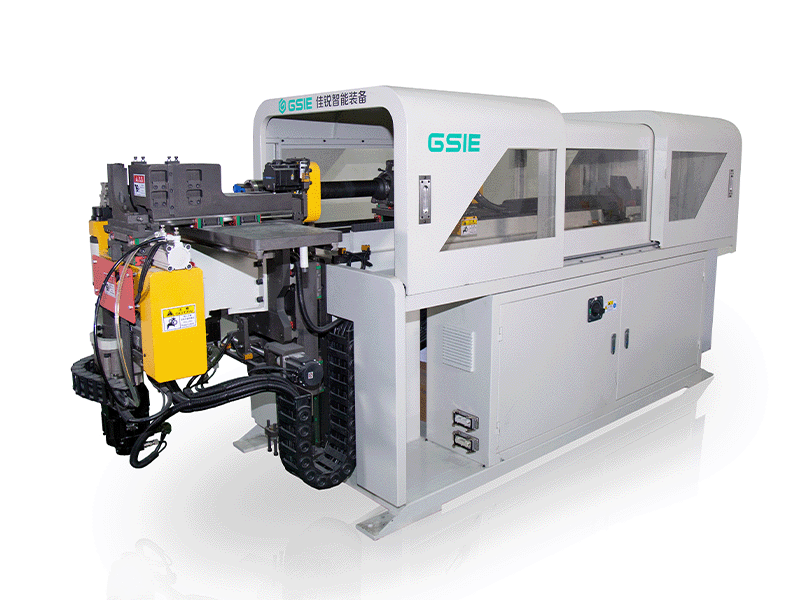
Key Difference of Pipe vs Tube Bender: Wall Thickness & Measurement
Although the terms “pipe” and “tube” are often used interchangeably, they represent two different engineering concepts, and this difference directly affects bending processes and machine selection.
A pipe bending machine is generally used for pipes that are designed to transport fluids such as water, gas, or oil. Pipes are typically defined by nominal diameter and feature thicker walls, allowing them to withstand internal pressure and harsh working environments.
A tube bending machine, on the other hand, is designed for tubes that are defined by their outer diameter and precise wall thickness. Tubes are manufactured with tighter tolerances and typically refers to applications in structural components, precision equipment, or automotive exhaust systems.
Another important distinction is geometry. Pipes are almost always round, while tubes can also be square, rectangular, or oval, depending on design requirements.
This difference may seem subtle, but it significantly influences bending behavior, tooling selection, and machine configuration.
How These Differences Affect the Bending Process?
Because pipes have thicker walls, pipe bending processes are typically more focused on structural strength and durability. They are less sensitive to deformation but require higher force during bending.
Tube bending, however, demands much higher precision. Thin-walled tubes are more vulnerable to issues such as:
- Wrinkling on the inner radius
- Flattening or ovalization
- Wall thinning or cracking
To control these problems, CNC tube bending machines are widely used. These machines allow precise control over feeding speed, rotation angle, and bending radius, ensuring stable and repeatable results even in complex geometries.
In modern manufacturing, CNC technology has become essential because it eliminates inconsistencies caused by manual operation and significantly improves production stability.
Types of Tube & Pipe Bending Machines
In practical manufacturing, tube and pipe bending machines are not only defined by general technology types, but more importantly by their functional configuration and level of automation.
For industrial production, especially in CNC - based systems, bending machines are typically categorized based on how they integrate bending, automation, and additional processes.
1. CNC Pipe & Tube Bending Machines
CNC bending machines represent the core of modern tube forming technology. They use computer-controlled servo systems to precisely manage bending sequences and angles.
Depending on production needs, they can be configured as:
- Standard CNC bending machines
- Left-right integrated bending systems
- Multi-radius bending machines
- Fully automated robotic bending cells
These machines are widely used because they allow:
- Complex multi-bend geometries in a single program
- High repeatability in mass production
- Reduced dependency on manual operation
In industries such as automotive and electric vehicles, CNC bending has become the standard production method for pipes and structural tubes.
2. Standard CNC Pipe Bending Machine
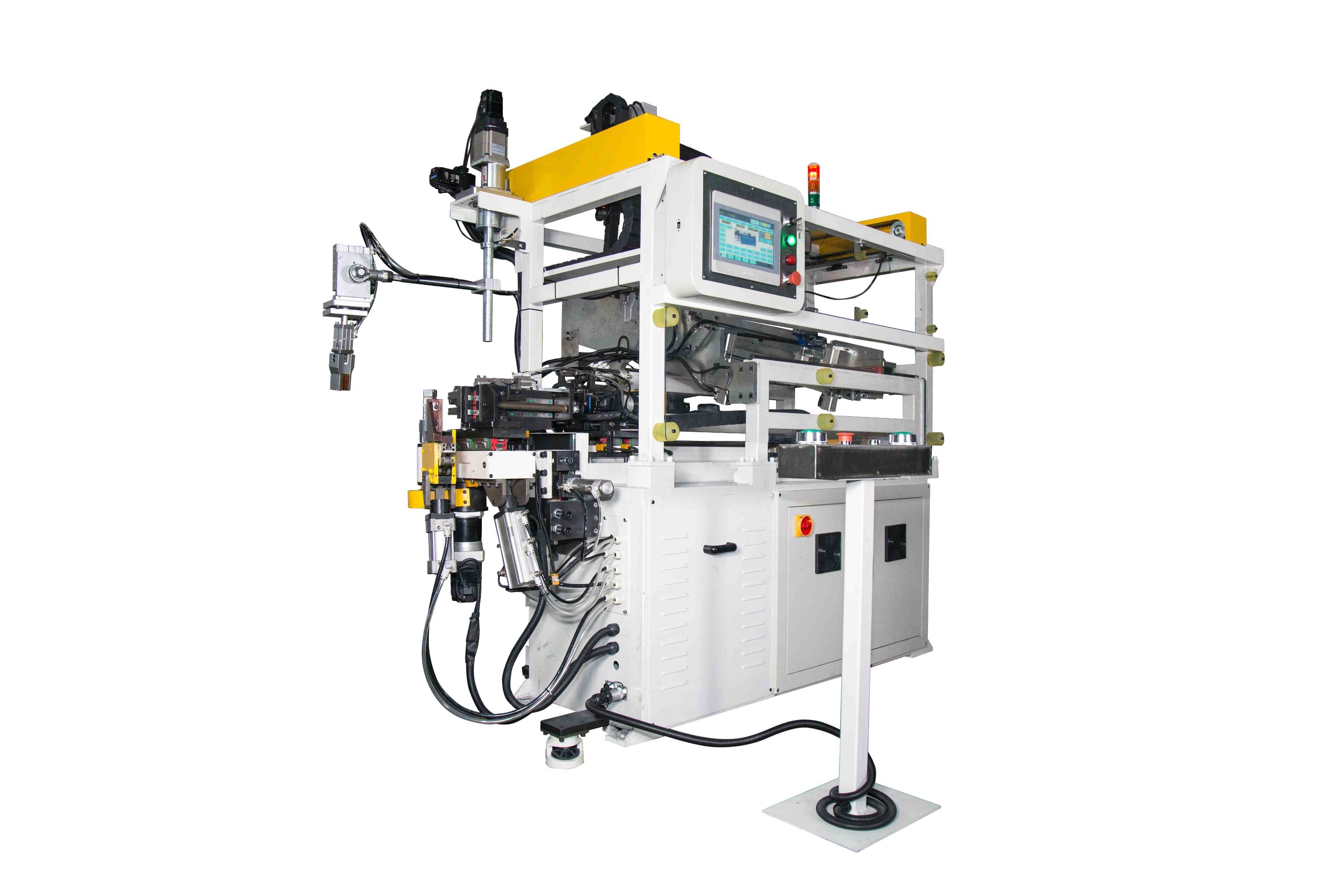
The standard CNC pipe bending machine is the most widely used configuration in industrial production.
It is designed for:
- Stable and repeatable bending operations
- Medium to high-volume production
- Multi-angle and multi-radius bending tasks
This type of machine is commonly applied in automotive piping, HVAC systems, and general industrial tube processing.
3. Left-Right Integrated Pipe Bending Machine
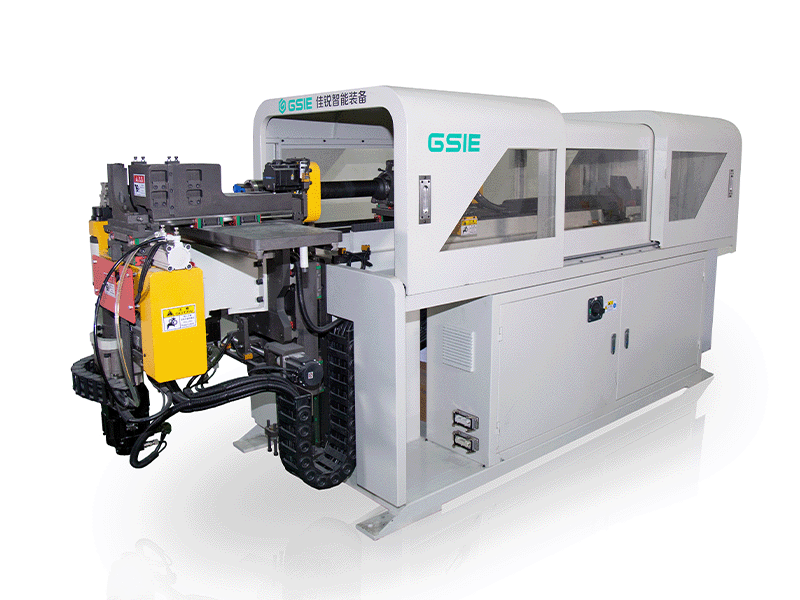
A left-right integrated bending machine allows bending in both directions without repositioning the workpiece.
This configuration is particularly useful for:
- Complex geometries
- Symmetrical structures
- Multi-bend components
By reducing repositioning steps, it improves both efficiency and accuracy.
4. Robot Pipe Bending Machine
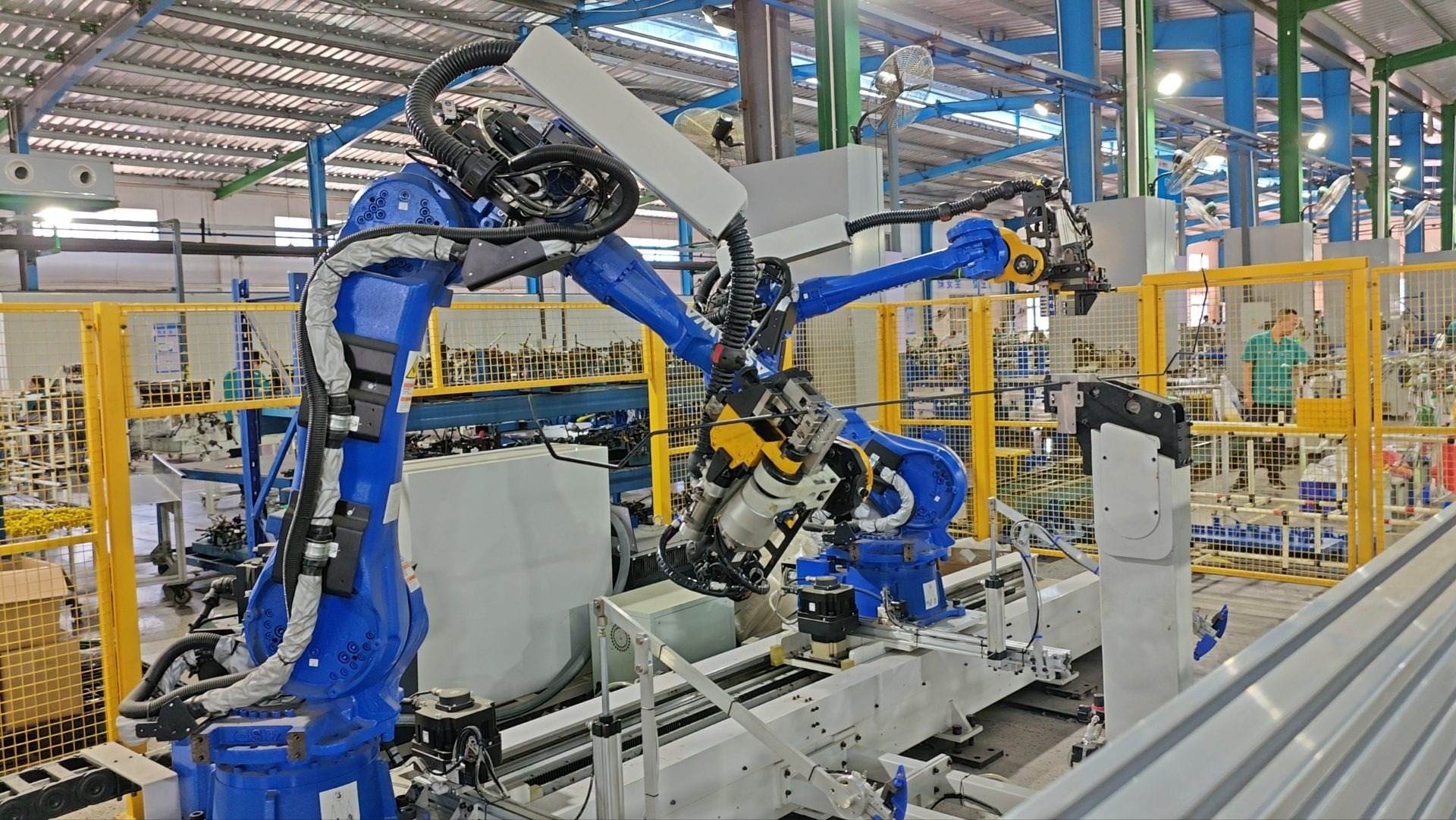
Robot pipe bending machines combine CNC bending systems with robotic automation.
They enable:
- Automatic loading and unloading
- Continuous production cycles
- Reduced manual intervention
This type of system is ideal for high-volume manufacturing environments where consistency and efficiency are critical.
5. Cutting End Integrated Bending Machine
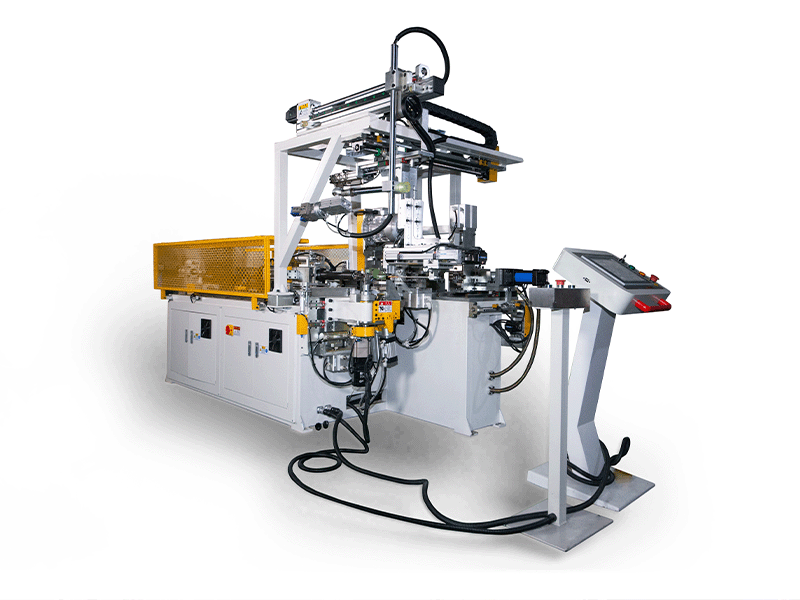
This type of machine integrates cutting functions directly into the bending process.
Instead of using separate equipment, it allows:
- Cutting and bending in one workflow
- Reduced material handling
- Improved production efficiency
It is especially useful for streamlined production lines.
6. Robot Busbar Bending Automatic Line
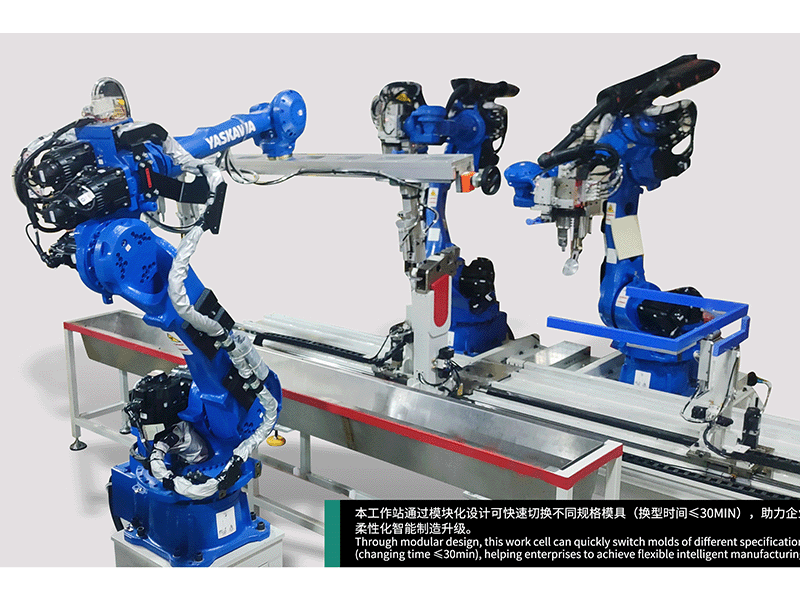
This is a fully automated bending solution designed for complex and high-volume production.
It typically includes:
- Robotic handling systems
- CNC bending execution
- Integrated process control
Such systems are widely used in advanced manufacturing sectors where automation and precision are essential.
7. Fully Automatic Tube Processing Lines
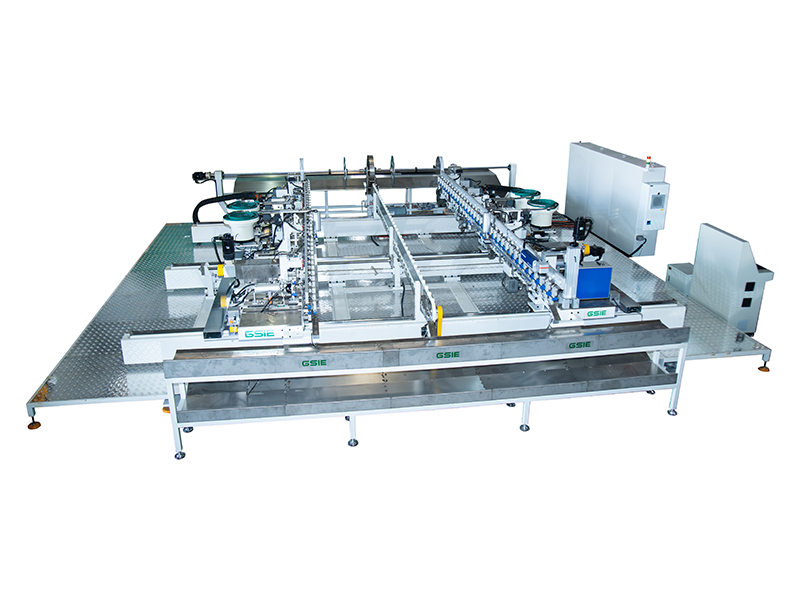
At the highest level of industrial production, tube processing systems are fully integrated into automated lines that combine:
- Cutting
- Bending
- Forming
- Assembly
These systems are designed for continuous production, where raw tubes enter one end and finished components exit the other.
This level of automation significantly improves production efficiency and reduces dependency on manual labor.
Industrial Applications of Pipe and Tube Bending Machines
CNC bending technology is widely used across multiple industries where precision metal forming is required.
Typical application sectors include:
Exhaust systems, chassis, EV battery frames
- Aerospace & Aviation
Lightweight structural tubing
Air conditioning pipes and heat exchange systems
- Medical Equipment
Precision tubing with strict tolerances
- Furniture & Construction
Metal frames and structural supports
Additional industries include:
- Shipbuilding
- Marine engineering
- Liquid cooling system piping
- Sports equipment manufacturing
Each of these industries requires different levels of precision, strength, and complexity, which is why CNC based solutions have become the industry standard.
Bending Methods Explained
Different bending applications require different forming methods. Choosing the right method is essential to ensure accuracy, surface quality, and structural integrity.
1. Rotary Draw Bending
Rotary draw bending is one of the most widely used methods in precision tube forming. In this process, the tube is clamped and rotated around a fixed die to achieve controlled bending.
It is commonly used for:
- Automotive exhaust systems
- Structural frames
- Precision tubing applications
This method is known for producing highly accurate and repeatable bends, especially in CNC controlled systems.
2. Mandrel Bending
Mandrel bending uses an internal support (mandrel) inserted into the tube during bending.
Its main purpose is to prevent:
- Wrinkling on the inner radius
- Collapse of thin-walled tubes
- Deformation in tight-radius bends
This method is essential for thin-wall tube applications where precision and surface quality are critical.
3. Roll Bending
Roll bending is used to create large-radius curves by passing the tube through a set of rollers.
It is commonly applied in:
- Large structural components
- Construction frames
- Architectural metalwork
This method is suitable for gradual, large-scale curvature rather than tight bends.
4. Compression Bending
Compression bending works by forcing the tube against a fixed form die to create a bend.
It is a simpler method compared to CNC or mandrel bending, and is often used for:
- Low-precision applications
- Basic structural components
- Cost-sensitive production
Key Advantages of Modern CNC Bending Technology
Modern CNC pipe and tube bending systems are not just about shaping metal—they represent a shift toward intelligent manufacturing.
High Efficiency Through Multi-Station Operation
Many advanced machines support 4-station or 8-station multi-process configurations, allowing multiple operations to be completed in a single clamping cycle.
This eliminates repeated loading and unloading, significantly reducing cycle time and improving overall production efficiency.
High Precision Through Servo Control Systems
CNC bending machines use servo-driven systems combined with intelligent programming to ensure:
- Accurate bending angles
- Consistent radius control
- Stable batch production quality
This level of precision is especially important in industries where even minor deviations can affect assembly performance.
Automation and Reduced Labor Dependency
By integrating robotic loading systems and automatic material handling, modern bending systems greatly reduce manual intervention.
This leads to:
- Lower labor costs
- Reduced human error
- Stable 24/7 production capability
Automation also improves safety by minimizing operator involvement in repetitive mechanical tasks.
What Is Bend Radius & Why It Matters?
Bend radius refers to the radius of the curve inside the bend.
It is one of the most critical parameters in tube and pipe bending because it directly affects the final product performance.
It influences:
- Structural integrity
- Appearance quality
- Material stress distribution
If the bend radius is too tight, it may cause deformation or cracking. If it is too large, the final assembly may not meet design requirements.
Choosing the correct bend radius is therefore essential to ensure product reliability and avoid defects during production.
How to Choose the Right Bending Machine?
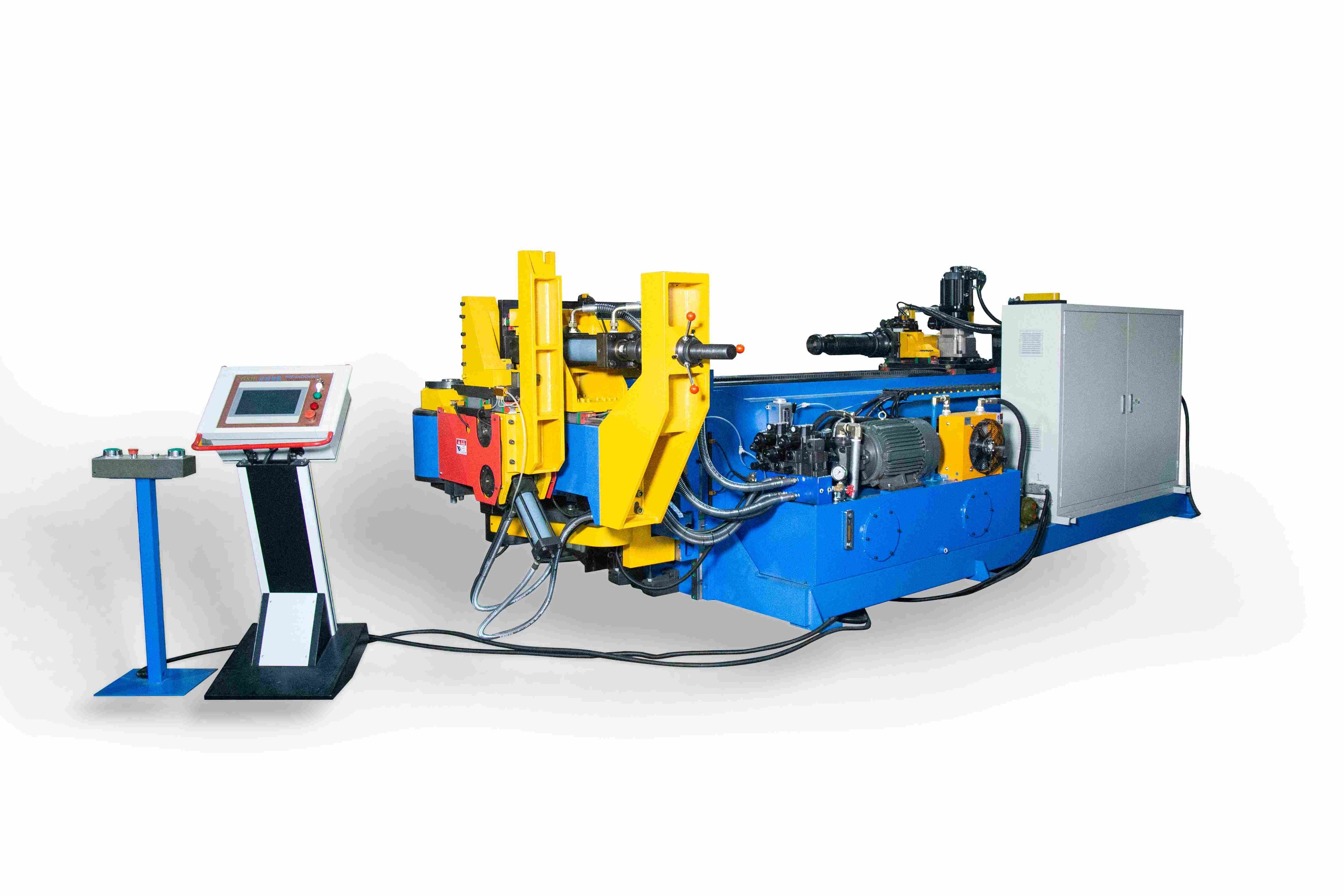
Selecting the right machine depends on multiple technical and production factors.
Key considerations include:
- Material type and wall thickness
- Tube or pipe diameter
- Required bending radius
- Production volume
- Required automation level
- Integration with existing production systems
Understanding these parameters ensures that the selected machine aligns with both technical requirements and production efficiency goals.
Cost of Tube Bending Machines
The cost of pipe and tube bending machines varies significantly depending on system complexity and automation level.
Main factors include:
- Machine type (manual, hydraulic, CNC)
- Automation level
- Production capacity and speed requirements
Although CNC and automated systems require higher initial investment, they often deliver stronger long-term ROI due to:
- Reduced labor requirements
- Higher production efficiency
- Lower defect rates
- Improved consistency
Common Bending Problems & Solutions
During tube bending production, several common defects may occur.
Wrinkling
Caused by insufficient internal support during bending.
Solution:
Use mandrel support to stabilize the tube structure.
Cracking
Caused by excessive material stress or incorrect bending radius.
Solution:
Adjust bend radius or select more suitable material properties.
Springback
Occurs when the material elastically returns after bending.
Solution:
Compensate using CNC programming adjustments to offset deformation.
Why Choose Integrated Tube Processing Solutions (GSIE Advantage)?
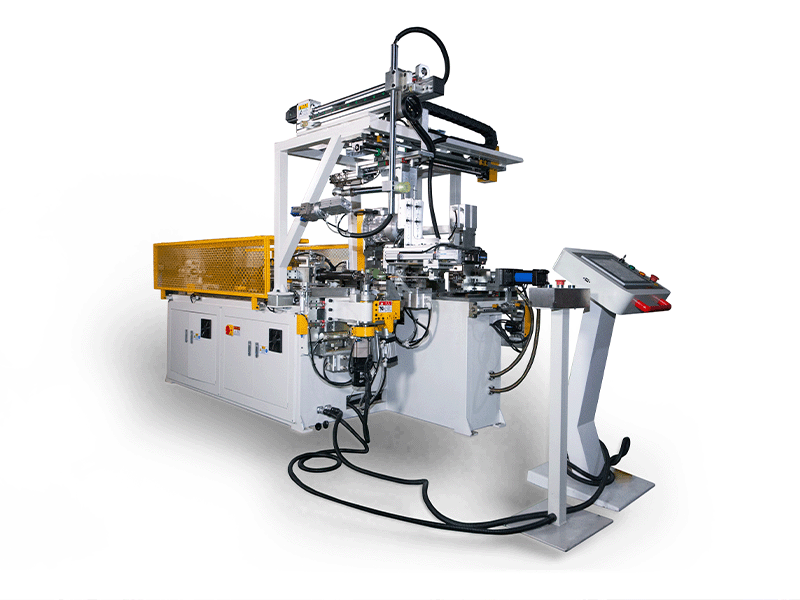
Modern manufacturing is no longer about single machines—it’s about complete system integration.
System-Level Integration
Instead of separate equipment, integrated solutions connect cutting, bending, forming, and assembly into one workflow.
Multi-Station High Efficiency
Many advanced machines support multi-station operations (4-station, 8-station).
This allows:
- Multiple processes in one clamping
- Reduced handling time
- Significantly higher throughput
Servo Precision & Consistency
Using servo-driven systems and intelligent programming:
- Every product maintains identical dimensions
- Ideal for mass production
- Reduces human error
Automation & Labor Cost Reduction
With robotic integration and automatic loading/unloading:
- Less manual intervention
- Lower labor cost
- Stable 24/7 production
FAQs About Pipe & Tube Bending Machine
Q1: What is the difference between a pipe and a tube in bending applications?
A: The main difference lies in wall thickness and measurement standards. Pipes are generally thicker and used for fluid transport, while tubes have tighter tolerances and thinner walls, making them suitable for precision applications such as automotive and aerospace structures.
Q2: Why do tube bending machines require CNC control?
A: Tube bending requires high precision due to thin wall structures and strict dimensional requirements. CNC control ensures accurate positioning, repeatability, and reduces human error during complex multi-bend operations.
Q3: What causes wrinkles during tube bending?
A: Wrinkling usually occurs when there is insufficient internal support during bending. This is common in thin-wall tubes and can be prevented by using mandrel bending systems or adjusting bend radius parameters.
Q4: What industries use CNC tube bending machines the most?
A: CNC tube bending machines are widely used in automotive manufacturing, electric vehicle production, aerospace structures, HVAC systems, medical devices, and furniture manufacturing due to their precision and repeatability.
Q5: What is springback in tube bending?
A: Springback refers to the tendency of metal to partially return to its original shape after bending. This is a material property and is usually compensated through CNC programming adjustments.
Q6: Is mandrel bending always necessary?
A: No. Mandrel bending is mainly required for thin-walled tubes or tight-radius bends. For thicker materials or larger radii, non-mandrel methods may be sufficient.
Q7: What is the advantage of automated tube bending lines?
A: Automated systems significantly improve production efficiency by integrating cutting, bending, and forming into a continuous process. They also reduce labor dependency and improve consistency in mass production.
Conclusion
Choosing the right pipe bending machine or tube bending machine depends on your materials, precision requirements, and production scale.
As manufacturing continues to evolve, CNC bending machines and automated tube processing lines are becoming the standard for achieving:
- High efficiency
- High precision
- Scalable production
If your goal is to improve productivity while maintaining consistent quality, investing in an integrated tube processing solution is the most effective path forward.
Get Your Custom Solution
Looking for the right solution for your application?
From standalone machines to fully automated production lines, customized systems can be designed based on your specific requirements.
Contact us today to get a tailored tube processing solution.