
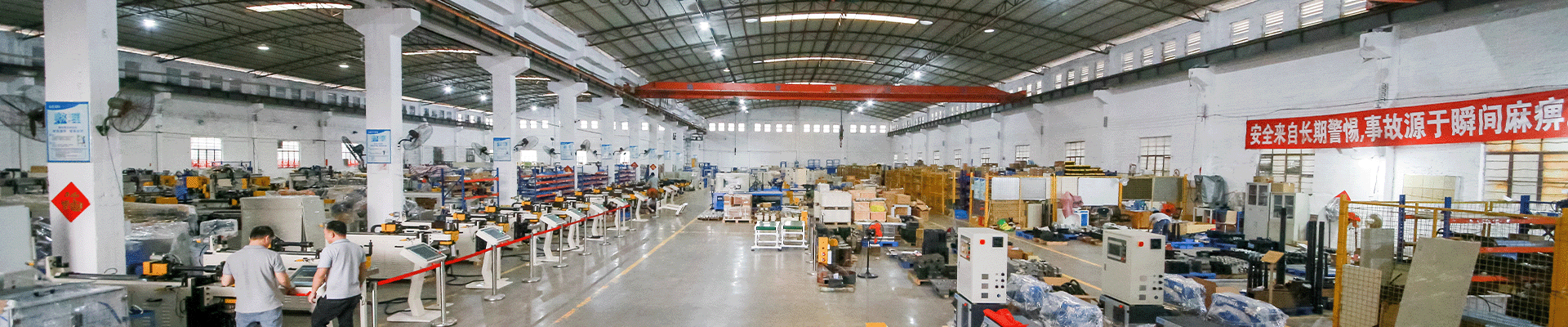
Electric vehicle manufacturing is changing the role of tube processing. EV frames, thermal management circuits, structural cross members, and battery cooling systems may use a wide range of tube sizes and materials, often with tighter packaging constraints than conventional vehicle programs. Production teams need flexible lines that can move from a prototype or pilot schedule to stable series production without rebuilding the entire process. What matters most is how bending, end forming, joining, inspection, data collection, and material handling work together in one adaptable system.
Trend one: flexible cells instead of isolated machines
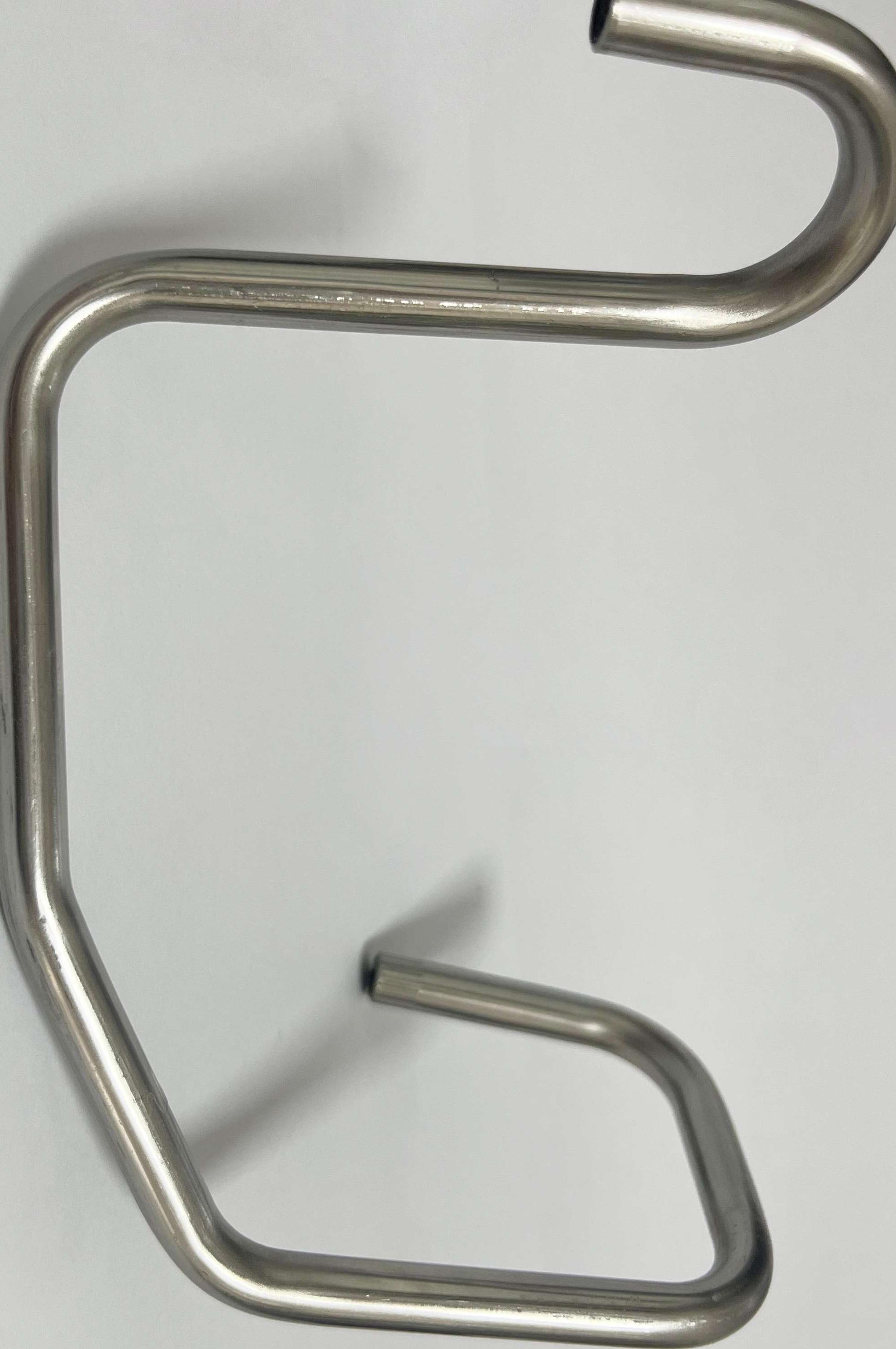
GSIE tube further processing and automation solution
An isolated tube bender may be adequate for a simple, high-volume part, but EV programs regularly change geometry as battery capacity, wheelbase, cooling performance, and crash requirements evolve. A flexible cell can combine a CNC tube bending machine with automatic loading, end forming, marking, inspection, and controlled unloading. Recipes can define the process for each part number, while a production system dispatches the correct job based on schedule and material availability.
The value of flexibility should be measured in engineering and changeover hours. A cell with standardized fixtures, quick-change tooling, and offline programming can introduce a revised tube more quickly than a collection of individually optimized machines. It also gives the manufacturer a common data model for alarms, quality results, and maintenance. This makes the equipment easier to scale across vehicle platforms and production sites. The selected tube bending equipment should expose the same recipe and status information as the other stations.
Trend two: combining bending with end forming
Battery cooling lines and EV frame tubes frequently require formed ends for hose connection, brazing, welding, sealing, or precise assembly location. Moving the tube manually from a bender to a separate tube end forming machine can add handling, orientation errors, and work-in-process inventory. A connected line can transfer the tube directly, preserve its datum, and verify the correct recipe at each station.
This does not mean that every operation must be forced into one machine. A better approach is to define the handoff between processes. The bender should deliver a repeatable spatial position, while the end forming station should control profile, axial length, and surface condition. A robot can manage orientation and station transfer, and the inspection system can compare the finished part against the relevant CAD or gauge requirements. The result is a shorter and more traceable route from cut tube to assembled component.
Trend three: robotic flexible lines
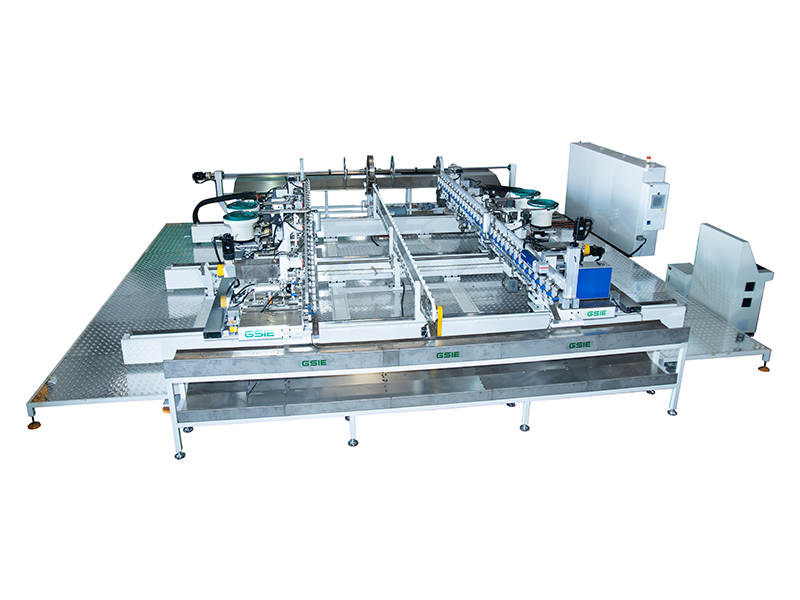
GSIE ATL Automatic Line
GSIE's ATL Automatic Line is presented for PA pipe processing from about 5.25 to 6.45 mm in diameter and 500 to 4500 mm in length, with E/F flaring and different gaskets and joints at both ends. The example shows why EV-line automation must be specified around real tube families and connection operations.
Robotic flexible lines are becoming more important as EV manufacturers produce several variants on the same platform. A robot can handle tubes of different lengths, select the correct tooling, and route finished parts to inspection or packing. Vision, barcode, or RFID identification can prevent a mismatch between material and program. With a suitable gripper and fixture strategy, the robot can also present parts to a pipe forming machine or a welding cell without repeated manual reorientation.
Good automation design begins with part presentation. The tube must be placed in a predictable location, and the gripper must support thin walls without marking the surface. The cell needs clear recovery procedures for a dropped part, a sensor fault, or an interrupted cycle. Operators should be able to identify the current recipe, the reason for a stop, and the disposition of the part in process. Flexibility that cannot be recovered quickly becomes hidden downtime.
Trend four: internal high-pressure forming for difficult geometries
Some EV frame and cooling-system components have branched, expanded, or locally shaped sections that are difficult to produce through conventional bending and welding alone. Internal high-pressure forming can shape a tube against a die by applying controlled internal fluid pressure, allowing complex contours and a reduction in the number of joined pieces. This can help designers pursue lower mass, fewer welds, and a more continuous load path when the material and design are suitable.
IHPF should be considered as part of the line architecture, not as a replacement for every traditional operation. The process requires careful control of tube preparation, sealing, pressure, die design, lubrication, and unloading. The formed component must be checked for wall thickness, dimensional accuracy, surface condition, and possible leakage. Integrating IHPF with upstream bending and downstream inspection allows the engineering team to optimize the complete route and identify where pre-bending or end preparation improves forming stability.
Trend five: inspection moves closer to the process
EV components have little tolerance for a tube that is dimensionally correct in one area but wrong at a connection point. Automated lines are therefore moving inspection closer to the operation that creates the feature. A CNC tube bender can report position and program data; an end forming station can record force and stroke; a vision system can check profile, orientation, and surface condition; and a leak tester can verify the finished cooling circuit.
The future-ready EV line is the one that combines validated process steps, clear handoffs, and traceable quality data with enough flexibility for the next vehicle variant.
Conclusion
For EV frames and battery cooling systems, the most useful automation strategy combines flexible cells, integrated forming, robotic handling, IHPF where geometry demands it, and in-line inspection.
GSIE, brings these capabilities together through its Fully Automatic Production Line, CNC Tube & Pipe Bending Machine, ATL Automatic Line, Robot Integrated Automatic Line, Internal High-Pressure Forming, and Tube End Forming Machine solutions, helping manufacturers build an EV tube-processing line around real part and quality requirements.