
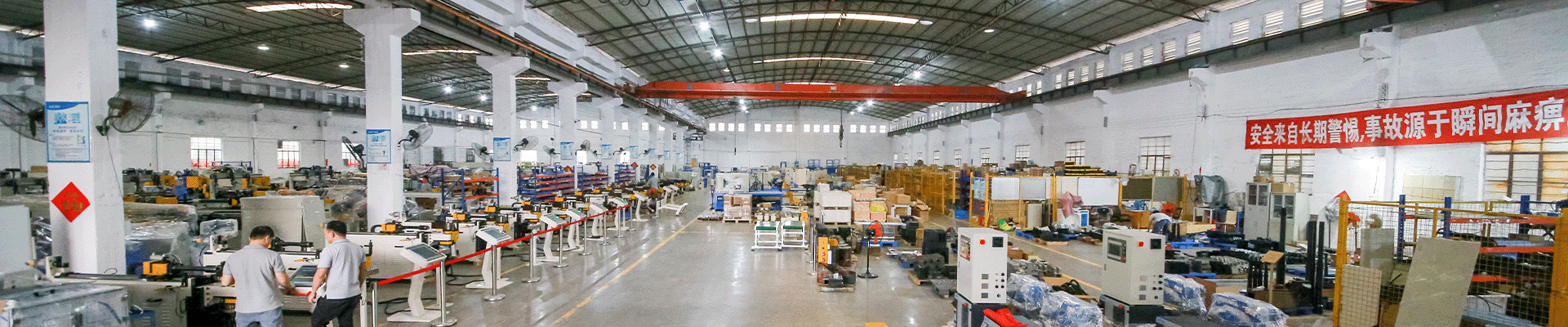

Tube expansion is one of the most common ways to prepare a tube for joining. It is used every day in air-conditioning lines, automotive exhaust and coolant pipes, furniture frames, and hydraulic systems. In this article, GSIE explains what tube expansion is, how pipe expanding works in tube end forming, how it differs from tube reducing, where it is used, and how to get consistent, crack-free results with a tube expanding machine.
What Is Tube Expansion?
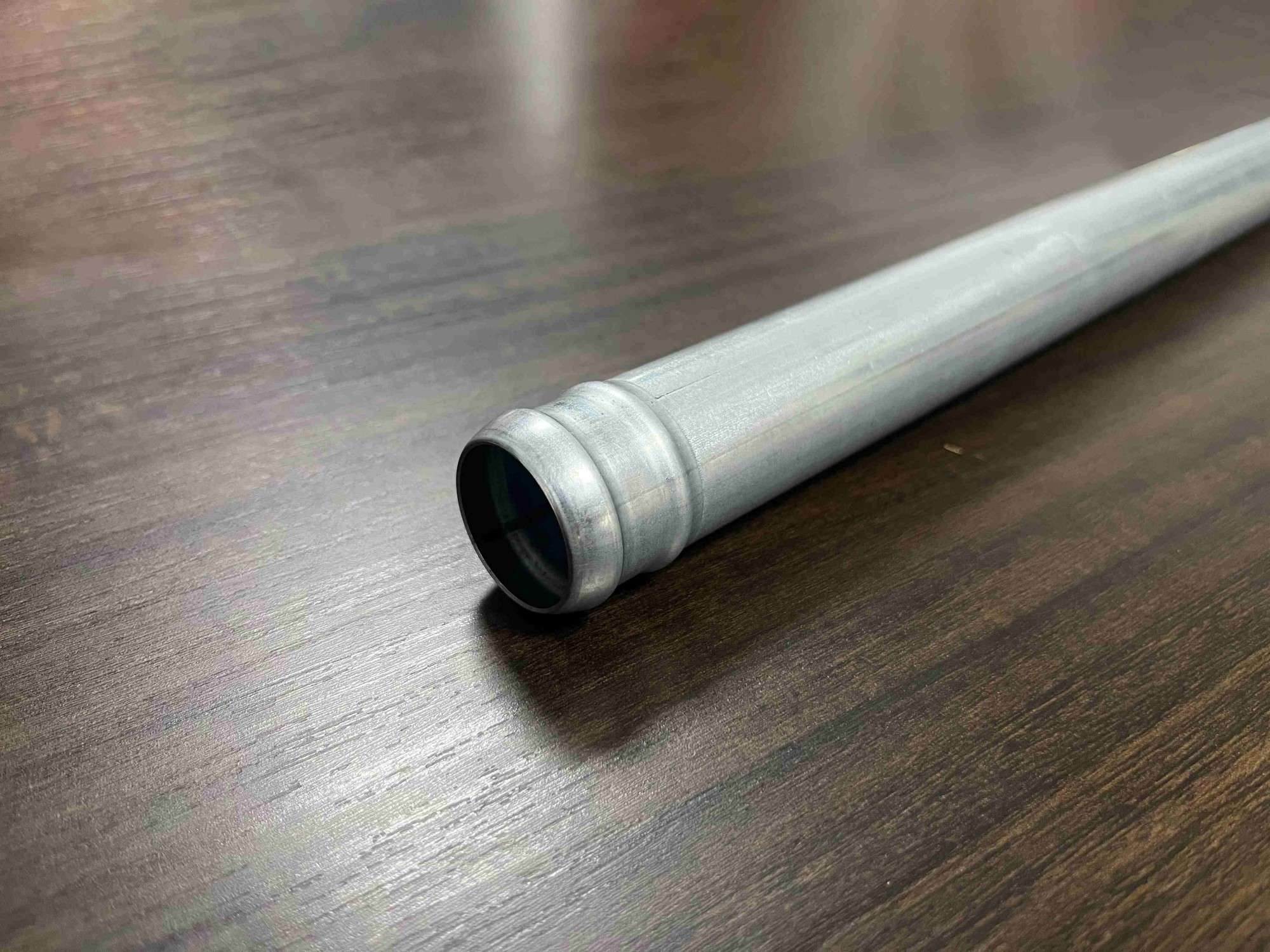
Tube expansion is a cold-forming process that permanently enlarges a tube's diameter. A tool inside the tube pushes the wall outward until it plastically deforms and holds its new size. The term is used in two different industries, so it helps to separate them:
|
|
Tube-to-tubesheet expansion |
Tube end expansion (end forming) |
|
Where |
Heat exchangers, boilers, condensers |
Fluid lines, exhaust, frames, fittings |
|
What happens |
Tube OD is rolled tight against a hole in a tubesheet or drum, thinning the wall slightly to seal |
Tube end is enlarged to a new ID/OD over a set length, free of any outer container |
|
Typical tool |
Roller expander, torque-controlled |
Punch, mandrel or rotary tool on an end forming machine |
|
Goal |
Leak-tight mechanical joint in the sheet |
Socket, slip-fit, sealing seat or step for joining |
The rest of this article focuses on tube end expansion, the version used in tube fabrication and performed on tube end forming machines. Here, the expanded end usually becomes a socket that a second tube of the same nominal size can slide into, replacing a separate coupling.
How Pipe Expanding Works
Every pipe expanding job follows the same basic sequence:
- Prepare the end. Cut the tube square, deburr it, and clean it. Burrs and uneven ends are a main cause of cracks during expansion.
- Clamp. Clamping dies grip the outside of the tube so it cannot slide or buckle under axial force.
- Insert the forming tool. A punch, tapered mandrel, or segmented tool enters the bore.
- Expand. Axial or radial force pushes the wall outward to the target diameter over the required length.
- Retract and check. The tool withdraws, and the end is checked for ID, OD, length, roundness, and surface defects.
Main expanding methods
- Punch (ram) expanding. A hardened punch with a tapered nose is driven into the tube in one stroke. Fast and repeatable, ideal for modest expansion ratios in high-volume production.
- Progressive (multi-step) expanding. Several punches enlarge the tube in stages. Because the metal moves a little at a time, larger expansions are possible without cracking or excessive thinning. Multi-station end forming machines do this in one clamping.
- Segmented or mandrel expanding. Tool segments open radially inside the tube. Useful for larger diameters, longer expanded lengths or non-round profiles.
- Rotary (roller) expanding. Rollers spin inside the tube and roll the wall outward. Gives a smooth finish and accurate roundness; also the method used for tubesheet joints.
Manual pipe expanders vs industrial machines
Hand-held and hydraulic pipe expanders are common in auto repair shops, for example, to size an exhaust pipe on the spot. They suit one-off jobs. In production, a CNC or servo tube end forming machine controls stroke, speed, and position for every part, so dimensions stay consistent across thousands of pieces; expanding can also be combined with chamfering, reducing, beading, or grooving in the same cycle.
Tube Expanding vs Tube Reducing
Tube reducing is the opposite operation. Instead of pushing the wall outward from inside, a die closes or presses over the outside of the tube end and shrinks its diameter. Both are often done on the same end-forming machine with different tooling.
|
|
Tube expanding |
Tube reducing |
|
Diameter change |
Larger |
Smaller |
|
Tool position |
Inside the tube (punch, mandrel) |
Outside the tube (die, sleeve) |
|
Wall thickness |
Tends to thin |
Tends to thicken |
|
Main risk |
Splitting or cracking at the edge |
Wrinkling or buckling |
|
Typical use |
Socket for slip-fit joints |
Neck to fit a smaller part or another tube's ID |
The choice usually comes down to the joint design: expand the female tube, or reduce the male tube. Some parts need both, for example, a step-reduced end on one side and an expanded socket on the other.
Applications of Tube Expansion
- HVAC and refrigeration. Copper and aluminum refrigerant tubes are expanded into sockets so they can be brazed directly to each other. This removes couplings and cuts the number of brazed joints in air conditioners, heat pumps, and refrigerators.
- Automotive. Exhaust pipes are expanded so sections slip together and clamp tightly. A/C lines, coolant pipes, and fuel lines use expanded ends for brazed or sealed connections.
- Furniture and fitness equipment. Expanded and reduced tube ends let frame members telescope or plug into each other for strong, clean-looking joints.
- Hydraulics and fluid handling. Expanded seats and stepped diameters prepare tubes for fittings, seals, and sleeves.
- Medical and precision tubing. Small thin-walled stainless tubes are expanded to create custom interfaces and stepped transitions.
- Heat exchangers. Beyond tubesheet rolling, tubes in fin-and-tube coils are expanded to bond tightly to the fins and improve heat transfer.
Benefits of Tube Expansion
- No extra coupling. The tube forms its own socket, so couplings, sleeves, and adapters drop out of the bill of materials.
- Fewer joints and leak paths. One brazed or clamped joint replaces two at each coupling.
- Strong, concentric joints. A precisely sized socket gives an even braze gap or clamping surface all the way around.
- Faster assembly. Parts push together on the line with no extra fitting to position.
- Low cost per part. Cold forming takes seconds per end and wastes no material.
Common Defects and How to Prevent Them
|
Defect |
Typical cause |
Prevention |
|
Cracking or splitting at the edge |
Expansion ratio too large for the material, burrs, work-hardened tube |
Deburr and chamfer first, expand in progressive steps, anneal hard material |
|
Excessive wall thinning |
Large expansion in one stroke |
Limit expansion per step, check minimum wall after forming |
|
Out-of-round end |
Worn tooling, poor clamping, uneven wall in raw tube |
Maintain tooling, use precision clamp dies, IO size if needed |
|
Inconsistent length or diameter |
Manual feed, variable stroke |
Servo or CNC control of stroke and position |
|
Scratches and galling |
Poor lubrication, rough punch surface |
Proper forming lubricant, polished or coated punches |
Chamfering the end before expansion is one of the simplest ways to cut crack rates, which is why many modern end forming machines include a chamfering station ahead of the forming stations.
Choosing a Tube Expanding Machine
In production, tube expansion is done on a tube end forming machine. When comparing machines, check:
- Tube range. Maximum OD and wall thickness, and the materials you form (copper, aluminum, carbon, or stainless steel).
- Forming force and drive. Hydraulic drives give high force for thick or hard tubes; servo-electric drives give precise, programmable positioning.
- Number of stations. More stations allow progressive expansion and extra operations such as reducing, beading, or grooving in one clamping.
- Chamfering and cutting. An integrated chamfer or facing station improves end quality and reduces cracking.
- Automation. Auto feeding, transfer, and unloading for continuous high-volume output.
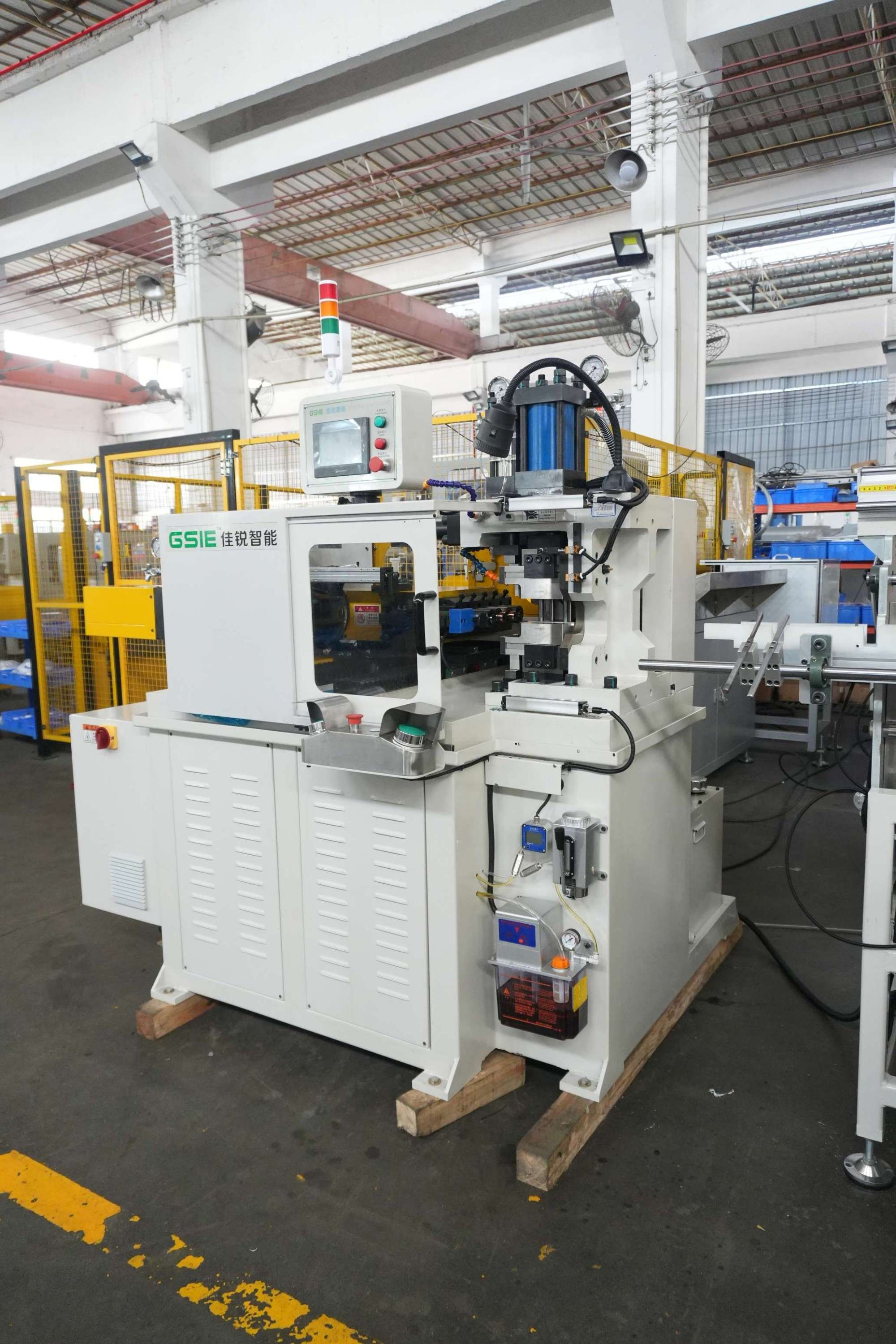
GSIE tube end forming machines for tube expansion
GSIE tube end forming machines handle expanding, reducing, flaring and shaping across a wide range of tube diameters for automotive, HVAC, furniture and industrial customers.
|
Model |
Key features |
|
5 ram stations and double clamp dies for progressive expansion, with automatic feeding and unloading |
|
|
Cutting, chamfering, and end forming in a single clamping, with servo and ball screw station positioning |
|
|
Multi-station end forming and grooving all-in-one, all stations working simultaneously |
Conclusion
Tube expansion turns a plain tube end into a ready-made socket, removing couplings, cutting leak paths and speeding up assembly. The keys to good results are clean, chamfered ends, the right expansion method for the ratio, and a machine that controls every stroke. To find the right setup for your tubes, explore the GSIE tube end forming machine series or send your part drawing to our team.
FAQ
- Is tube expansion the same as flaring?
No. Flaring opens only the very end outward at an angle to make a sealing face. Expansion enlarges the diameter evenly over a longer length so another tube fits inside.
- How much can a tube be expanded?
It depends on material, wall thickness, and temper. Soft copper and aluminum accept larger expansions than hard steel. Do large expansions in progressive steps.
- Does expansion make the tube wall thinner?
Yes, slightly. As the diameter grows, the wall thins, so you must check the expansion ratio and minimum wall thickness.
- What is the difference between tube expansion and tube rolling?
Tube rolling usually means roller expansion of a tube into a tubesheet hole in heat exchangers and boilers. End-forming expansion enlarges a free tube end to create a joint.