

Look closely at a car's air-conditioning line, a brake pipe, an exhaust system, or the frame of an office chair, and you will notice that the tube ends are rarely just cut square. They are flared, expanded, reduced, beaded, or grooved so the tube can seal, connect, or lock into the next component. That reshaping step is called end forming, and it quietly decides whether a tube assembly is leak-free, strong, and fast to install.
What Is End Forming?
End forming (sometimes called end finishing) is a group of metal-forming operations that change the shape of a tube or pipe at, or near, its end. It is usually done after the tube is cut to length and often after it is bent. Instead of attaching a separate coupling or fitting, the tube end is reshaped to become the connection, seal, or stop feature itself.
Most end forming is done cold. The tube is held firmly in clamping dies while a punch, ram or rotating tool presses or rolls the material into the required profile. Common materials include carbon steel, stainless steel, copper, brass and aluminum. Complex shapes are often produced in several progressive steps, so the metal moves gradually without cracking, wrinkling, or thinning the wall too much.
Main end forming processes
|
Process |
What it does |
Typical use |
|
Enlarges the tube diameter over a set length |
Slip-fit one tube into another without a coupling |
|
|
Reducing (necking) |
Shrinks the diameter at the end |
Fits a smaller downstream part or creates a step |
|
Flaring |
Opens the very end outward at an angle |
Sealing face for flare nuts and compression fittings |
|
Beading |
Raises a ring around the circumference |
Holds hoses and clamps in place under pressure and vibration |
|
Ram forming |
Pushes a shaped punch into or over the end |
Closures, steps, cones, dimples and custom profiles |
|
Rotary/orbital forming |
A rotating tool rolls the metal into shape |
Smooth flares, closed ends, high-precision symmetric forms |
|
IO (inside/outside) sizing |
Brings ID and/or OD to a tight tolerance |
Preparation before joining or further forming |
|
Grooving, chamfering, facing |
Rolls grooves or machines the end face and edge |
O-ring seats, clean square ends, deburred edges |
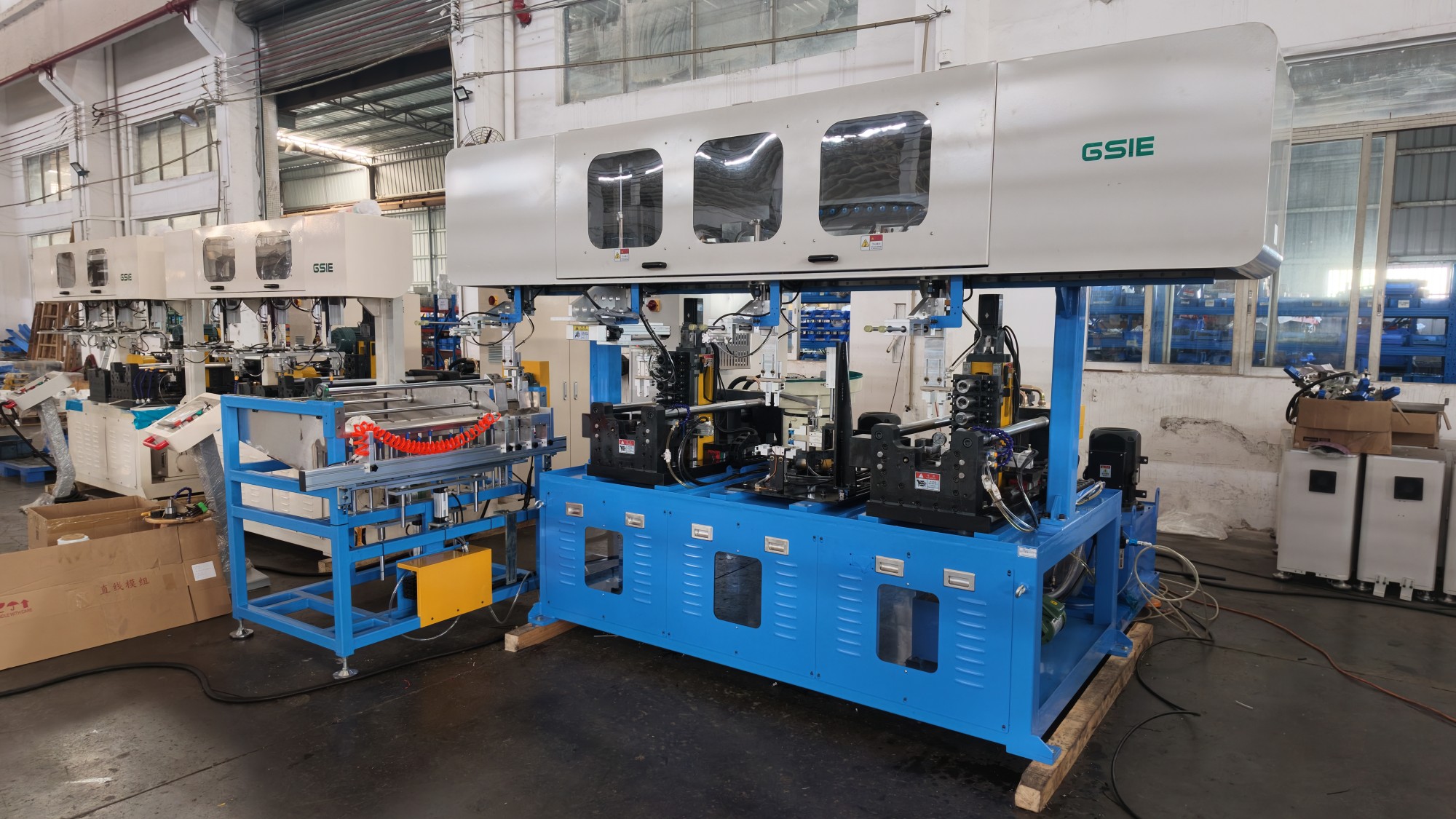
These operations can be combined. A single part may be chamfered, expanded, beaded, and grooved in one cycle, which is exactly why multi-station end forming machines exist.
Applications of End Forming
Anywhere a tube carries a fluid or gas, or must join another part mechanically, end forming is likely involved.
- Automotive and heavy truck. Air-conditioning lines, fuel and brake lines, coolant and turbo pipes, and exhaust systems all depend on beads, flares, spherical ball ends, and expanded sockets. Beading is one of the most widely used end forms here because many tubes must be connected into one assembly.
- HVAC and refrigeration. Copper and aluminum tubes in air conditioners, heat pumps, refrigerators, and heat exchangers are flared, expanded, and reduced so joints can be brazed or mechanically sealed without leaks.
- Hydraulics and fluid power. High-pressure hydraulic tubing uses precise flares and sealing profiles, sometimes with nuts or sleeves fitted before forming, to stay leak-free under vibration and pressure pulses.
- Furniture and fitness equipment. Chairs, tables, beds, racks and gym frames use reduced or expanded ends so tubes slide into each other, plus flattened or closed ends for fasteners and caps.
- Aerospace and motorcycles. Lightweight tube structures and fluid lines need accurate, repeatable end forms that meet tight tolerances.
- Medical and precision devices. Small-diameter tubes are end-formed for instruments and fluid-delivery components where consistency is critical.
- Industrial equipment and appliances. Gas lines, water heaters, compressors, and machinery frames all rely on formed tube ends for connection and sealing.
Benefits of End Forming
Compared with welding on a coupling or machining a separate fitting, forming the tube end itself brings clear advantages.
- Fewer parts and lower cost. The tube becomes its own connector, so you can often remove separate couplings, sleeves, and adapters from the bill of materials.
- Fewer leak points and failure points. Every extra joint is a potential leak. A formed end removes a joint, and accurate flares and beads give a reliable sealing surface.
- Stronger connections. Cold forming work-hardens the material and keeps its grain flow continuous, so the end can be stronger than a welded or brazed add-on.
- Faster assembly. Expanded sockets, beads, and reduced ends let tubes slide, push, or clamp together quickly on the assembly line.
- Less material waste. Forming moves metal rather than cutting it away, and it needs no filler metal or extra stock.
- Design freedom. Steps, cones, closures, grooves, and asymmetric shapes can be combined on one tube, giving engineers more options in tight spaces.
- Consistency at volume. On a CNC or servo-controlled end former, every part is formed with the same stroke, force, and position, so quality stays stable across long runs.
- Cleaner and faster than welding. No heat-affected zone, no spatter, no post-weld cleaning, and cycle times measured in seconds.
From Process to Production: The Tube End Forming Machine
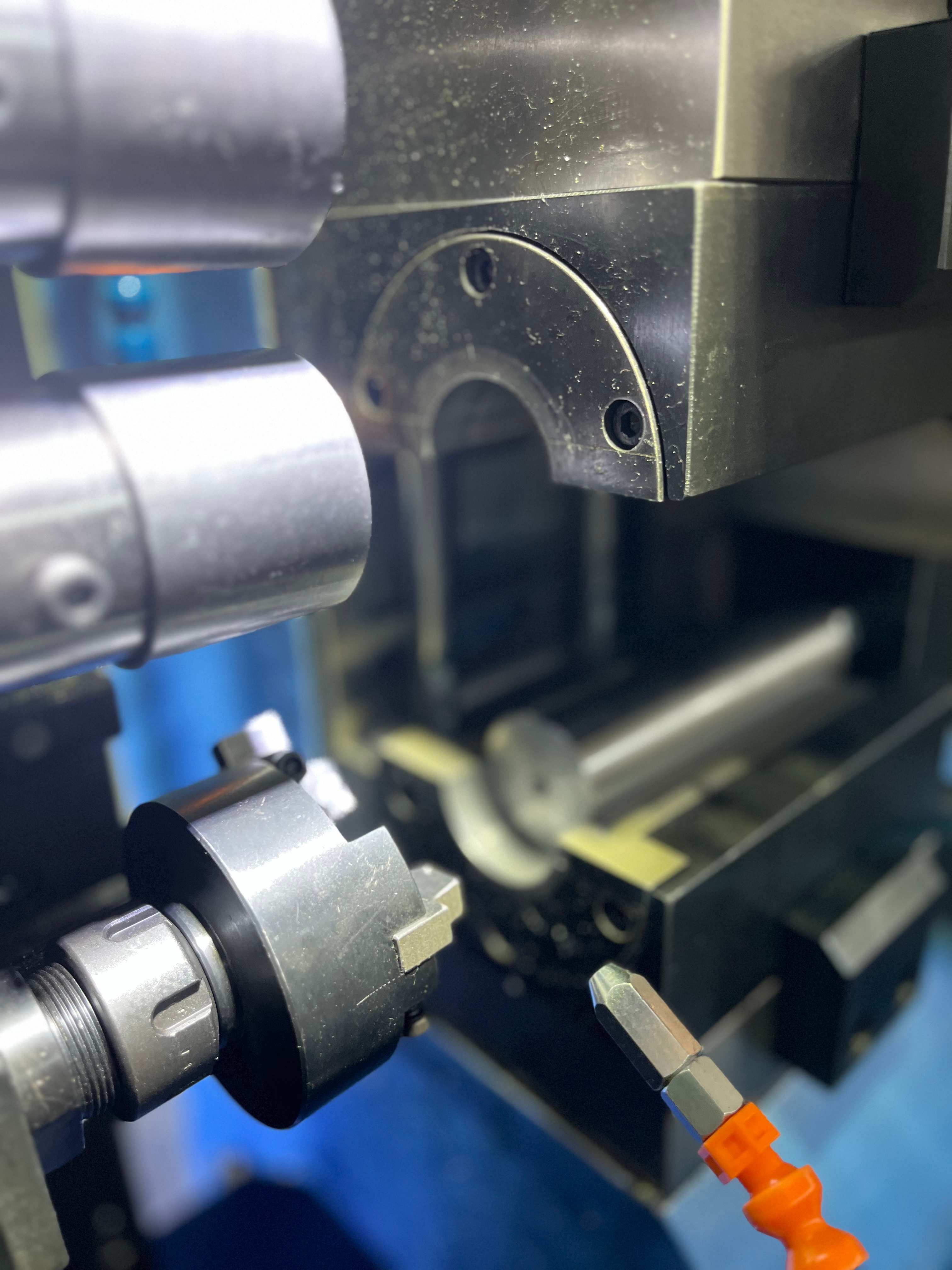
These benefits depend on the equipment doing the work. A tube end forming machine clamps the tube in precision dies and applies controlled force through punches, rams, or rotating tools to form the end. Modern machines go well beyond a single hit:
- Multi-station forming. Several punches index in sequence, so expanding, reducing, flaring, beading, and grooving are completed in one clamping.
- Hydraulic or all-electric drive. Hydraulic systems deliver high extrusion force for thick walls and hard materials; servo-electric systems give precise, programmable positioning.
- Integrated chamfering and cutting. Facing or chamfering before forming gives a clean, square end and a consistent forming length.
- Automation. Hopper feeding, robot or gantry transfer, and automatic unloading allow continuous, lights-out production and easy integration with cutting and CNC bending lines.
When choosing a machine, match it to your tube diameter and wall thickness range, materials, operations per part, production volume, and how often you change over between part numbers.
GSIE tube end forming machines
GSIE designs and builds tube end forming machines for expanding, reducing, flaring and shaping across a wide range of tube diameters, serving automotive, HVAC, furniture and industrial equipment manufacturers. Typical configurations include:
|
Model |
Key features |
|
Fully automatic: hopper feeding, gantry robot transfer, double 5-station cold heading and automatic nut insertion |
|
|
Chamfering plus 4-station high-force extrusion for steel, copper and aluminum; servo and ball screw punch indexing |
|
|
8 servo-positioned forming stations with a dedicated chamfering unit on one platform |
Conclusion
End forming turns a plain cut tube into a functional part: a sealing flare, a slip-fit socket, a hose bead or a precise groove. It cuts part count, removes leak points, speeds assembly, and keeps quality consistent from the first part to the ten-thousandth. The key to capturing those gains is the right tube end forming machine, matched to your tube sizes, materials, and output.
If you are planning a new tube line or upgrading from single-purpose presses, explore GSIE's tube end forming machine series or contact the GSIE team with your part drawing for a tailored end forming solution.
FAQ
- Is end forming the same as swaging?
Swaging is one type of end forming, usually reducing the diameter by rotary or ram action. End forming is the broader family that also includes expanding, flaring, beading, grooving, and sizing.
- What is the difference between flaring and expanding?
Flaring angles only the very end outward to make a sealing face. Expanding enlarges the diameter over a longer length so another tube can fit inside.
- Should end forming be done before or after bending?
Usually after cutting and often after bending, but some parts are formed on one end, bent, then formed on the other end. If the end form would interfere with the bend tooling, forming after bending is preferred.
- Which materials can be end formed?
Carbon steel, stainless steel, copper, brass, and aluminum are all common. Very thick or hard tubes may need higher-force hydraulic machines or progressive multi-step forming.